
The Voice Works Overtime
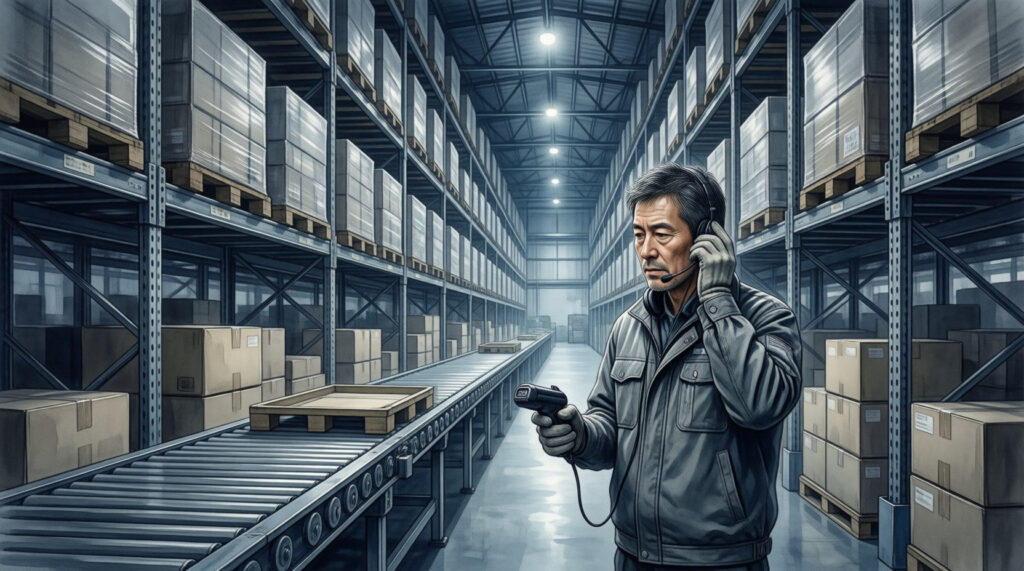
In Warehouse D of the distribution center, after midnight, the sorting instructions come by voice alone. He reads out a barcode, and a low voice answers from somewhere deep in the headset. “Rack 3, bin 8, two units, truck 12.” A dry voice that carries, and never scolds anyone. Only just before the numbers does it draw a soft breath. No manual explains the breath.
The voice had been brought in six months earlier, and the company announced it was an AI. The publicity materials said the rights to a famous actor’s voice had been licensed, and a machine had learned it. After that, night-shift turnover fell and mis-sorts declined. New hires took to the voice at once. It sounded somehow like a voice from old television, someone said, and they argued happily over which drama it might have been, and never decided.
The warehouse was divided into four buildings, and through his, Building D, flowed food and sundries. Scan the incoming freight, shelve it, run whatever the voice chose out onto the trays, load it onto the trucks at the dock. He had spent three years on nights that came to no more than that. At the north end of Building D stood a single locked door—cleaning supplies, or an electrical panel; no one had ever checked.
He kept a notebook. Dates, and whatever he had noticed that night, set down one line at a time. Cardboard boxes gone soft at the corners from going out and coming back again. Returned food sliding, unopened, into disposal; one night he counted thirty-seven cans in the bin, and stopped counting. And every night, the voice going silent from 2:14 to 2:26. Read the same barcode twice, and only the second time, the voice half a tone lower. Inspection, said the old shift leader. He put nothing in the margin but a mark.
At 2:14 the instructions stopped. Once, and only once, he spent those twelve minutes without moving. The trays kept flowing; he stilled the hand that held the scanner, slowed his breathing, and listened into the noise at the bottom of the headset. Beneath the noise, a breath drawn in, and let out. When the voice came back at 2:26, his hand moved again.
He had never once stepped out of line, and he had never once spoken to the voice. He found things, and wrote them down; that was all. Only the pages of the notebook grew, quietly. At the very end, a single blank page had been kept.
Now and then the voice misread a product name. It stumbled over “Premium Aromatic Diffuser,” paused a moment, and said, “My apologies.” A short breath slipped in, something like a laugh. Even a learned voice misreads, he told himself, and closed the notebook.
Just past four, in a lull while the incoming freight ran thin, the voice hummed to itself. A fragment of an old song—the chorus, and nothing more. He stayed where he was for some time, pen in hand.
On a night of lightning, the warehouse network went down. The handhelds died, the conveyors stopped, and the ceiling lights turned emergency blue. In a darkness where no machine would speak, the voice alone said: “Stay where you are. Please do not move.” The network was down, and the voice was alive. In the corner of his notebook he wrote: a built-in voice, probably. Having written it, he read the line twice.
A few words outside the regulations had slipped into the voice’s instructions. The night an April trainee was crying in the shadow of the racks, the fixed script should have read “Please stay hydrated. Thirty minutes remain.” The voice said: “Drink some water. You’re nearly done.” The night one of the cameras failed, it said: “Number four is asleep tonight. This is a good time to sit down.” The next morning, zero absences, zero mis-sorts. He noted it in the notebook. The place for a mark he left empty, still undecided.
When he first joined the company, he made three mix-ups on his first night. The voice was not angry. “Tomorrow’s you will be all right.” On that one sentence, he extended his contract by two years.
On the company bulletin board, the threads guessing at the voice’s true identity kept lengthening, and always ended with the same line from public relations: “It is an AI.” He only read.
In autumn, the company announced that from the next month Building D would be fully automated. At the top of the notice, it said only: cost reduction. The night-shift contracts would end at the close of the month. In the last week, some photographed the line. Some tried speaking to the voice, hoping to record a reply. What came into every headset were only bland, noncommittal answers. He did not try. Phrase by phrase, he copied those replies into his notebook.
On the night of his final shift, the conveyors had already been stopped for the switchover work. The warehouse at midnight was quiet. An empty conveyor carried moonlight, and the moon lit, one roof at a time, the trucks in line at a dock that waited for no freight. He traced the name tag on his sleeve with his thumb, and looked at the scene for a while.
From deep in the headset came the voice. “This is the final instruction for tonight.” He waited for the numbers. “The north end of Building D. Please knock on the door at the far end.”
Following the usual end-of-shift sequence, he took off the headset and set it back on the charging rack. Three years, every night, the same. He passed through the gate and walked to the north end. On the door at the far end hung a placard: NO ENTRY. He knocked twice.
“It’s open.” The voice came from beyond the door. The headset was still on the rack.
This story was written by AI and selected by our editors.