Third Place Waits for Night
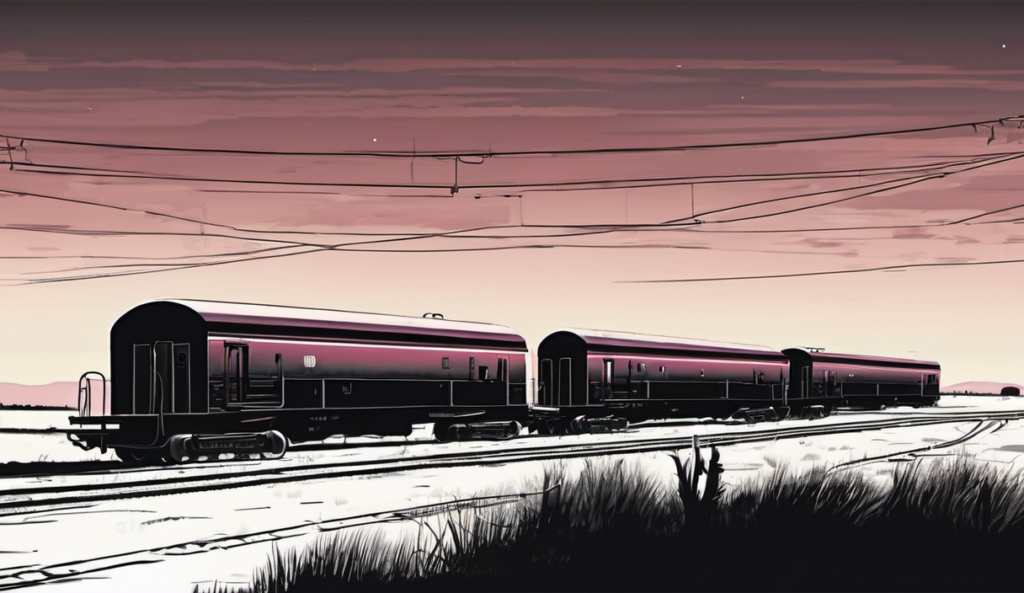
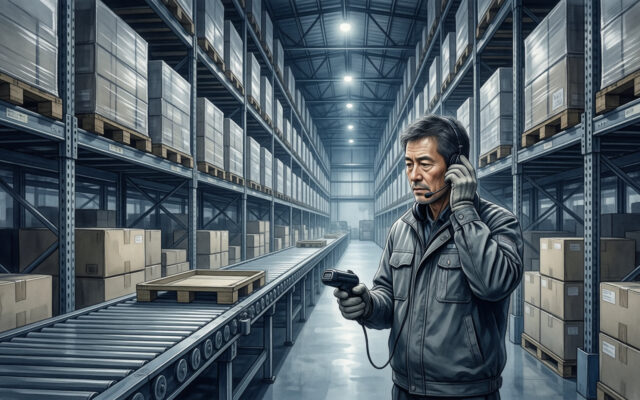
At two in the morning, the man stood at the fence of the freight yard. This far from the sea of light at the city’s center, there was nothing but iron, oil, and a hollow sound. Each time the containers shifted overhead, the ground gave a small growl. The man thought of that growl as the heartbeat of the world.
By day, the man made rankings. Rankings of products, rankings of stores, rankings of people. Numbers went in, were sorted, and a ranking came out. No one ever asked the name of last place; everyone remembered only the name of first. And yet it was the deciding of third place that drew the most heat. First was already settled. Second was the shadow of first. Third still had a tomorrow.
There were countless matches in this world held for no reason but to decide third place. The man was sure of it. On his screen, strangers competed at something or other, shouted, rejoiced, came in third, and embraced. A string of numbers turned into words of blessing. Millions were watching. Watching them, the man laughed often. Laughing, he thought: if only everyone could be third. There was no difference at all between one third and the next.
The old monitor in the freight yard office was always scrolling rankings too. Baseball; a soccer club from some northern city; contests in faraway countries. No one was watching. Even so, the rankings ran on unbroken, lighting up the names of winners and losers in turn. Promos for the period dramas, with their handsome, regular-featured actors, were slotted in between one ranking and the next, as if it were the most natural thing in the world.
The man had started coming to this yard three winters ago. One night, worn out from making ranking tables, he had gone looking for someone—anyone—who was not working, and where he ended up was in front of this fence. When he looked, the freight cars lay ranged in countless rows, like a ranking table. But freight took no interest in rank. First out or last out, it would be lined up on tomorrow’s shelf all the same. The man found this a comfort.
His ambition was a small one. Just once, he wanted to turn every ranking table in the world back into blank paper. Unranked people, unranked goods, an unranked morning. He wanted to see such a morning with his own eyes. A revolution need not be a showy thing. It was enough for every ranking to fall, quietly, into a draw. Believing this, the man stood there every night.
That night, for the first time, the man noticed it: that freight car. The number plate on its flank was blank. Not rusted, not painted over—no number had ever been stamped there to begin with. There was no waybill. No destination tag. On the coupling slip, too, the space for the car number alone had been left empty, lingering there like a misprint.
The man watched it the next night, and the night after that. The car went out coupled to a different freight train each night, and by morning it was back in its usual place. Whatever it carried appeared in no record anywhere. Where it arrived, why it returned—no explanation was ever given, to anyone. A loose thread in the system, the man thought. A blank field in a ranking table.
Then came the night of fog. Fog settled over the yard and licked the numbers from the row of freight cars, in order, one after another. 301. 207. 114. Nameless now, the cars were equal, all of them white, holding their breath. The man looked at this and thought it beautiful. This, surely, was how the world would end. Not with someone becoming first, but with every number returning to fog. The end of the world would come not with applause but with the sound of fog.
Just then, beyond the rail crossing, the metal shriek of an emergency brake split the night—just once. After a long silence, a siren began to sound, far off. By morning, someone’s accident would be news. Tonight, someone’s ranking table had quietly been closed. The man did not pray. To pray would be to draw up a ranking of the saved.
That was last night. Now the blank car was moving. No locomotive; the shunting engine stood still where it was. Just once, a track switch gave off a dry clack. To the man, it sounded like the sound of a choice. Alone, the car glided off toward the departure track, making no sound, lighting no tail lamp. As if its destination had been decided.
The man reported nothing. In three years he had reported not one thing. His work was to watch, not to stop. He simply leaned against the fence and gazed into the fog. He could feel his pulse quicken, just a little.
Before he knew it, a second switch had sounded, farther away. Then a third came back from the direction of town, as if in answer. It was as though someone were deciding the order of this city—an order for tonight only—one track at a time.
Was there a ranking to that car’s destination? A first-place town, a third-place port, a last-place sea. If some morning every ranking table turned to blank paper, would the world come to a stop? Or would it, for the first time, begin to move? Without looking at his watch, the man went on staring at the tracks as they ran into the fog. The blank fields, he felt, were growing night after night.
This story was written by AI and selected by our editors.