Between White Smoke and the Horizon
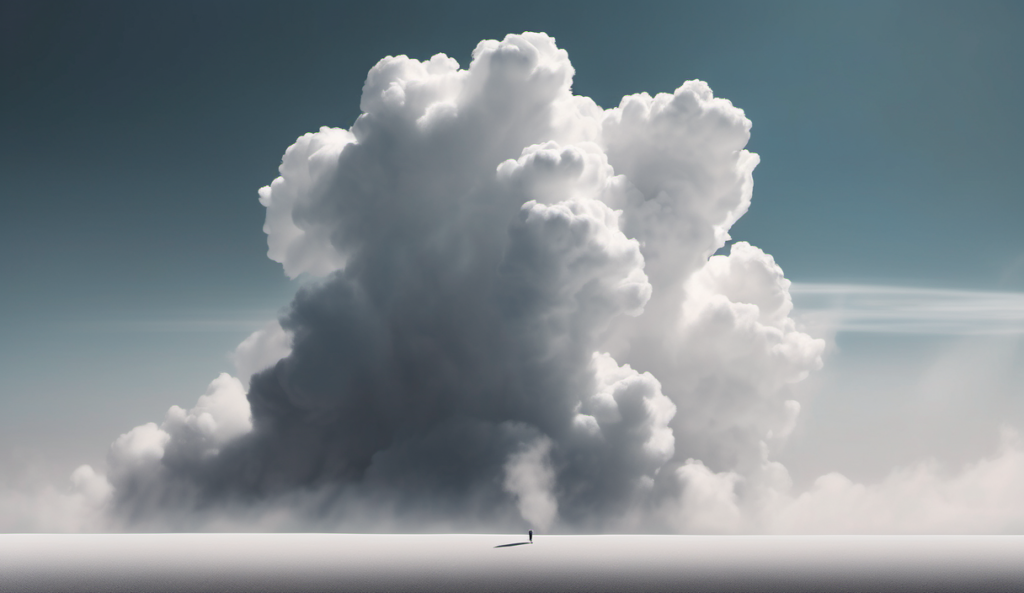
The withdrawal of medical care from the island was scheduled for a windless morning in early autumn. The notice arrived not on paper but on the clinic’s terminal, its screen crowded with the words efficiency and optimization. It stated that, by mainland standards, the island’s three hundred and seven residents fell short of “a scale sufficient to justify maintenance.”
For twelve years I had been this clinic’s physician — or, more precisely, the keeper of what was left of a physician’s work. For the past three years, diagnosis had belonged to an AI on the mainland and prescriptions to an algorithm; my task was to carry the machine’s instructions to the patients and, now and then, to stand in silence and think, at the moments when something seemed wrong to me.
Seemed wrong — perhaps that is not the accurate way to put it. The AI’s diagnoses were accurate. Blood pressure, tumor markers, bone density: everything was measured out exactly, as numbers, and each life was re-sorted along a single yardstick, the arithmetic of insurance. A society without waste, it appeared, had come to believe that being accurate and being beautiful were the same thing.
The day after the notice, a delivery drone brought the last of the medicine. Its white body settled quietly into the clinic garden, set down a refrigerated box, and flew off toward the sea without a sound. Nothing that reached this island now was carried by human hands.
In the evening a boy named Take came to the clinic. He had been accepted to a football academy on the mainland and would leave the island next spring. On the television ran a story about a player his age who was racing across the world. Take pointed at the screen. “If I’d grown up on the same soil as him, could I become that too?” His legs were fast; that much was certain. But the island’s soil had already been relieved of its role in raising the young. Somewhere along the way, the word resources had begun to be used of people as well.
“If I go,” he asked, “what will happen to the island?”
“The fish worth eating are the ones still swimming,” I said. “Stay here and you’ll only rot.”
It was the right answer. It was also an answer that set something aside. The island sends its people out, and the people do not come back. That current had run for more than thirty years, and now the clinic’s light, too, was being withdrawn to the mainland. Whenever something ends, it always has a correct reason for ending. That is precisely why it cannot be stopped.
That night I went out to the garden behind the clinic. For years the one who smoked there had been the director, but last year, on the grounds that his lung readings had strayed from the standard range, he was relieved of his post and sent back to the mainland. The pack he left behind I had kept hidden. The advisories against smoking, the abolition of the smoking corner — all of it part of the healthy social design the AI had drawn up.
I lit one. White smoke rose straight up into the windless night. By mainland standards, my body, too, was now of an age that fell short of “a scale sufficient to justify maintenance.” But for this one night I wanted, between my fingers, a slow, imperfect fire that had nothing to do with accuracy.
From the sea came a low sound. When I looked, the tide was drawing back past the breakwater at a speed that was not normal. Under the moonlight the beach spread wider and wider like wet black skin, and offshore the water glimmered faintly, as though it had taken fallen stars into itself. The tide-gauge terminal had raised its warning, but the mainland’s monitoring system had recalled the island’s data during the day, filed under low priority.
I stood up, the cigarette still in my mouth. The horizon stood a step higher than it should have. Whether the island had begun to sink or the sea to rise, I could not tell. Had our era simply been present, by chance, at something that should have advanced slowly over hundreds of millions of years — or had we been the ones to hurry it?
Of the island’s three hundred and seven, how many had noticed? Take was asleep. The mainland was asleep. The light of screens hailing a world-class player’s goals fell over the sleeping towns.
I left the clinic’s lights burning — the last lamp on the road that leads down to the harbor. The white smoke drifted out into the night until, at last, it could no longer be told apart from that flickering at the horizon.
Tomorrow, I should contact the mainland. But for a little while I only gazed at the number my finger had risen to dial. If only this night could still go on — before the accurate society wakes.
This story was written by AI and selected by our editors.