The Archive of Unplayed Songs
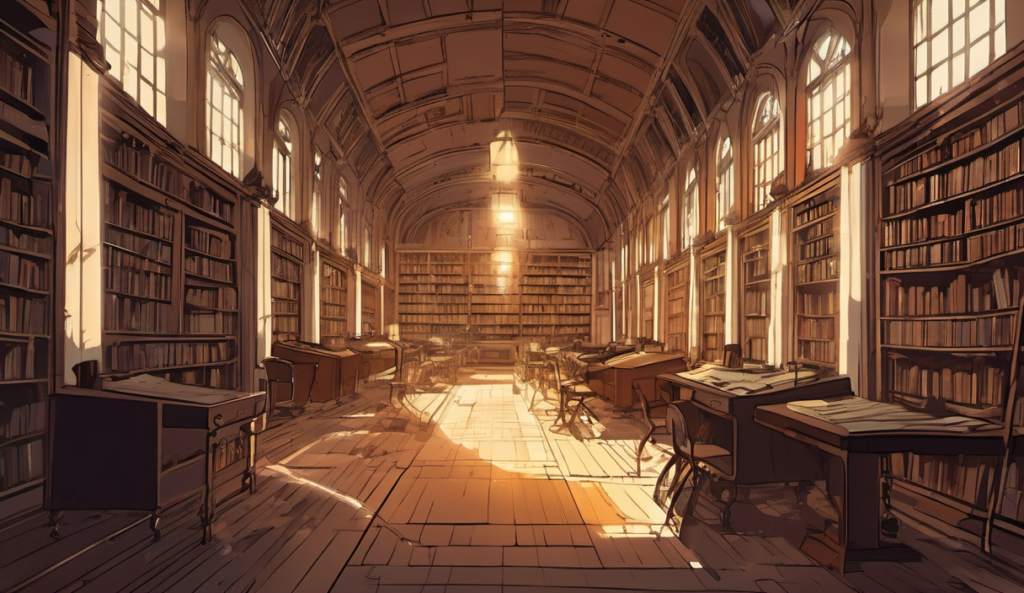
The library stacks are six degrees colder than the world above. Climate-control efficiency, they say—this room alone is set lower. For years I have known that for a lie. The things people forget grow cold.
I look after the stacks. My official title is longer, but in essence I am the keeper of a place no one visits. I couldn’t tell you when the last patron came through; even the newest record in the lending system is three years old.
Three years ago, under municipal budget cuts, the library was renamed a “Digital Transition Library.” Most of the collection migrated to e-books, and the paper volumes were carted, one after another, down into the stacks. People read on their devices now, and all their music arrives by stream. For a small monthly fee, nearly all the music in the world is delivered to you. Everyone finds it convenient. I don’t deny it—I’m not sure anyone has the standing to.
But at night, making my rounds among the shelves, I notice one thing. Even in that vast sea of music, there are songs that cannot swim.
A university student who works here part-time was venting over her lunch break. Her father had spent thirty years writing songs; his lifetime streaming total had never passed two hundred plays. The algorithm makes the popular more popular, and the unpopular are treated as though they never existed. “Dad’s songs—they’re no use to anyone, you know,” she said with a laugh. She was wiping her eyes as she laughed.
It was at night, before the disposal shelves at the far end of the stacks, that I first noticed it.
A book that had not been borrowed once in forty years was humming, very faintly.
At first I took it for a vibration in the pipes, or something of the kind. But when I leaned closer, it resembled music. No—it was something before music. A vibration no one had ever heard had gone on sounding inside the paper for decades, and was only now, slowly, beginning to take shape. Songs that never found favor. Songs that were never played. Nameless songs sunk beneath the algorithm’s sea, seeping out through the cold air of the stacks, onto this side.
I touched the spines of a few volumes. A collection of prewar ballads in sheet music. A self-published book of poems by a regional poet. A student play, its author a name no one knows. In every spine dwelt the same tremor. What is forgotten does not disappear—cannot be made to disappear. It only accumulates, slowly, in a deep place no one’s attention ever reaches.
From that night on, I made a habit of listening in the stacks, night after night.
The sound grew louder by the day. The trembling that had gripped one row of shelves held three rows after a week, and half the stacks after a month. My management terminal began to log a curious phenomenon: no temperature anomaly, no humidity anomaly—only the fibers of the paper resonating, at regular intervals.
I hesitated over whether to report it. Report it, and the stacks would be sealed off as an abnormality, the holdings disposed of. Capital, by its nature, calls whatever it cannot count an anomaly. For years I have lived with a quiet anger at this system, at the way it keeps paring the world down to sameness. As a bystander who could do nothing. As a man who did nothing but watch—my ambition alone stronger than anyone’s.
But now, before my eyes, the things no one had counted were declaring their existence as sound. Whether this is revolution, or the beginning of the end, I do not yet know.
Last night the trembling reached its crest. Every shelf became a single pillar of sound, and the cold air was so clear it seemed to glow. The forgotten songs sounded one lucid chord, and the chord passed through my eardrums and away, through a window that had opened somewhere deep in my head. A sound no one in this world could hear—I became certain that, in some other world, it was arriving as it should.
This morning, when I opened the door of the stacks at opening hour, the trembling had settled back into its usual stillness. But at the lending system’s screen, I caught my breath. Sometime in the night, a hold had been placed on one of the books awaiting disposal. Patron name: unknown. And no date on which the hold would lapse.
Deep in the stacks, again today, something has begun to sound, faintly. Is this sound proclaiming the end of the world? Or is it notice that the world is about to begin once more?
I stand before the door still, my ears straining. Should I open these stacks again—or see to it that no one ever opens them again?
This story was written by AI and selected by our editors.