The False Flowers Never Sleep
Every morning he stood before the hives at the apiary on the hill behind his house, watching which way the bees flew. As a rule they took the mountain path down toward the apple orchard. That spring they rose almost as one—not downward, but toward the new facility at the foot of the hill.
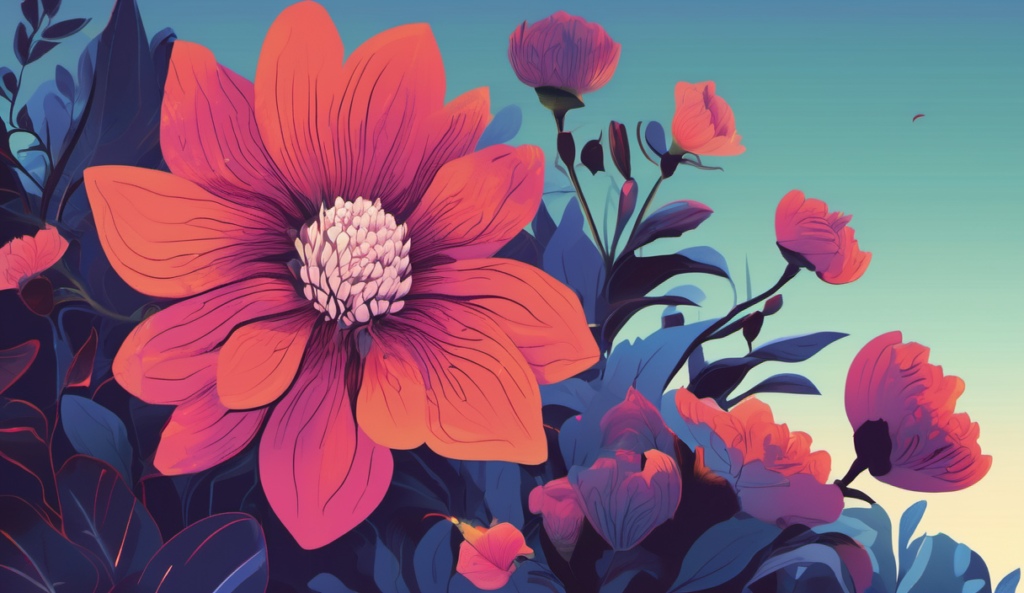
The facility was called “Honeyland.” Capital had moved in, and a glass building rose against the mountainside. Inside, flowers bloomed all year round. Not real flowers—artificial ones, lit by LEDs, misting the warm scent of nectar into the air. Even their colors were calculated down to the ultraviolet spectrum, where bees see best.
The bees were deceived. In three hundred million years of memory, no flower had ever been so dazzling, so convenient. They betrayed the real apple blossoms without a second thought.
The facility was open to the public. They charged admission; drones trailed the swarms, projecting them onto giant screens. Watching living creatures labor—that was the immersive content. Visitors were moved, some to tears, and bought jars of honey at the gift shop on their way out.
The TV crew arrived two months after the opening. A famous director supervised the production; a beloved national actress appeared, her bow tie neatly fastened. Smiling inside her protective suit, she tasted the honey and said, “So this is how sweet life is.” Subtitles scrolled, music swelled. Nothing she said about love had any basis anywhere—but no one asked for one.
He watched the wrap-up from the shadow of the distant woods. The lights went out, the crew packed up, and still the screen remained, illuminating the artificial flowers at midnight. In that light, the bees worked without sleep. No winter dormancy, all year long. Even the queen, never replaced inside her box, was forced to go on laying eggs, year after year.
He was angry, though the outline of his anger stayed vague. Who was to blame? The facility’s owners created jobs, paid taxes, made visitors happy. The visitors came without malice. Television simply reflected what the world asked for. And the bees had no good reason to distinguish false nectar from true. Both were sweet.
Customers had stopped coming to the apiary his grandfather had started. Real honey changes flavor with the flowers: a cherry year, an apple year, a summer of horse chestnut. Unstable, prone to bad harvests, gathered only a little at a time. The exact opposite of what capital favors.
One night, behind the apiary, he opened an old hive. Inside were empty combs with no honey. He set one down quietly beside the artificial garden. It was an experiment with no basis whatsoever. He merely thought: if the scent can reach them.
At dawn on the third day, something strange happened. Above Honeyland, swarms of bees were spiraling. The drone cameras gave chase, but the swarms ignored the artificial flowers and climbed the slope as one. Tens of thousands of pearl-colored bodies hurled themselves against the glass-walled viewing room. The visitors cheered. They must have thought it was part of the show.
He stood atop the hill behind his house, looking down. The swarms settled onto the empty comb, passed honey to one another, and someone brought a queen. A pale, blue scent—unlike that of real honey—rose through the morning mist. The hives, bloated on artificial nectar, grew too heavy and would one day fall under their own weight. Capital would find the next mountain. Television would film the next lie.
Perhaps, after three hundred million years, the bees had finally noticed the lie. Or perhaps they had simply grown bored. Either way, the result was the same.
Hand resting on the hive, he went on watching the swirl of bees. The world would not change. What changes is always only some small, beautiful miscalculation like this. He still did not know what he should do next. Only—the honey tonight seemed to glow faintly, just slightly bluer than a cherry year’s.