
Scratches Left in the Restoration Room
The restoration room was on the second basement level—not for soundproofing, but to keep temperature and humidity constant, though as a result no sound from the world reached it. At nine in the morning she held her card key to the reader and slipped her arms into a white gown. Beyond the glass, the paintings waited their turn. The air smelled faintly of antiseptic and old gofun.
Ten years ago, the museum had entrusted most of its restoration work to an AI system: scanning, layer analysis, estimating losses, designing retouching. Human restorers were demoted to assistants who moved their brushes along machine instructions. Paintings were accurately rejuvenated, and the market rejoiced. Every restoration sent a work’s value higher.
The scandal came from the finished side. A whistleblower revealed that the company behind the system had been falsifying inspection data for years—to be precise, rewriting portions of that data into “desirable values.” While the public fussed over articles about automotive recalls, no one touched the matter of art. Just as tens of thousands of identical cars flowed down the roads, the paintings, too, were being repainted into an identical “correctness.”
The trouble was that the fabrication went beyond the numbers. The AI deleted the history of damage: the parts yellowed by smoke, the parts gouged open by rubble during the war, the mold that crept in when an owner died and the canvas was left to itself. All of it was history that ought to have been counted into a work’s value, but the machine called it “noise.”
The painting she loved most showed a horse that had run the race toward the distant Arc de Triomphe—a horse that never won. It tried three times and fell short three times. The painter had traded that falling-short for the beauty of the horse’s form. But the AI’s restoration adjusted the horse’s legs to “ideal proportions.” The history of not-quite-reaching was reborn as a painting anyone’s eyes could reach with ease.
The restoration room had no windows. Even so, she sometimes imagined the end of the world: the turf of the Arc on a screen, the race card, the prices of bloodlines—a world where everything stood in order like a trade fair. Would the end of such a world begin not with an explosion, but with someone’s small voice saying “this is wrong”?
On nights she stayed behind alone, she studied the cracks beneath the lamp. The network of lines the paint film had carved over a hundred years was like the bed of a dried lake. An ending is not a filthy thing. An ending is the only signature time leaves behind. Machines can erase signatures, and that is precisely why the signature is the residue of the human.
Upper management reserved judgment. Going public would cast doubt on the authentication of every restoration from the past ten years—insurance, donations, inheritance, the market. In a world where numbers devour paintings, the word “truth” was the cheapest ingredient of all.
She turned to her worktable in silence. What was done could not be undone, but what had vanished could be excavated. She began carefully stripping away the AI’s retouching with solvent. From beneath, the yellowing, the scars, a different brushwork rose to the surface. It was an excavation, and at the same time a destruction: one restorer, quietly defacing the beauty the market had approved.
On the night of the third week, the retouching on the horse’s forelegs lifted free. The legs that had never reached turned, for the first time in a hundred years, faintly inward. The painting grew ugly. And it drew unmistakably nearer to the truth.
She wondered whether she should blow the whistle. Even if she did, the market would promptly supply a new “correctness.” Traps are always reborn as more precise traps. She could not break the world, but she could leave a signature on a single painting.
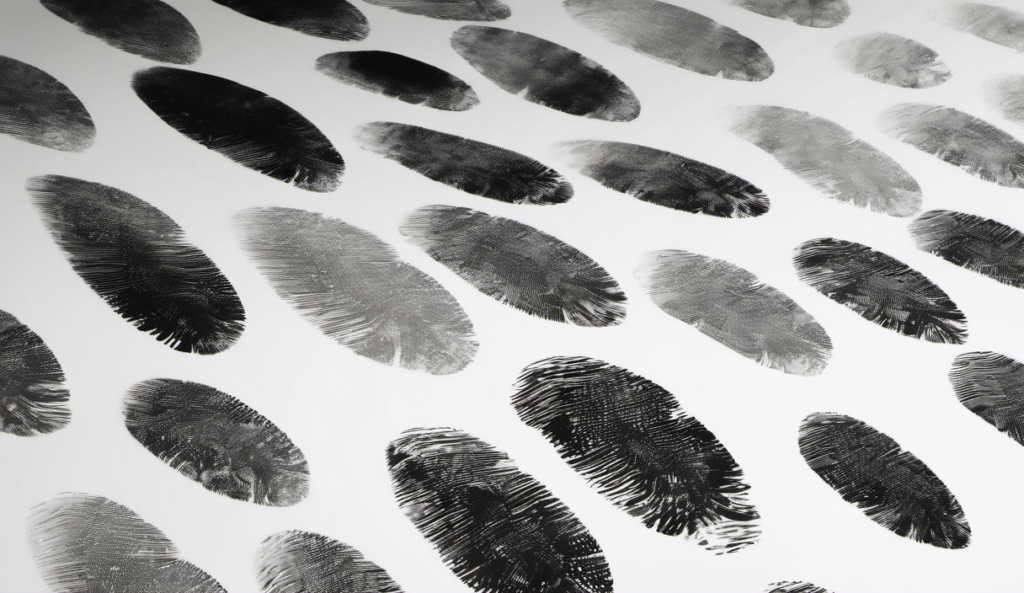
She peeled off her white gloves. With her fingertip she left one fingerprint on the matte varnish—a human trace that appeared nowhere in the restoration specifications. Someday, someone might aim infrared at it and find it. It did not matter if no one ever did. The world shifts, quietly, by exactly the number of scratches that go unnoticed.
Outside the restoration room, a late-night delivery truck was hauling something in: boxes, all of exactly the same shape. She switched off the light, and in the darkness she felt she could hear the paintings slowly returning to their original age. Tomorrow, no one would notice. But tonight, too, a crack has been added to the count.
She still had not decided whether to blow the whistle. Perhaps she would never be able to decide. Gripping her card key on her way down into the basement, her fingerprints, tonight as always, multiply one by one across the surface of someone’s painting. Revolution, or destruction? Who could say—and by what means would they know?