
No One Steps Down at the Last Stop
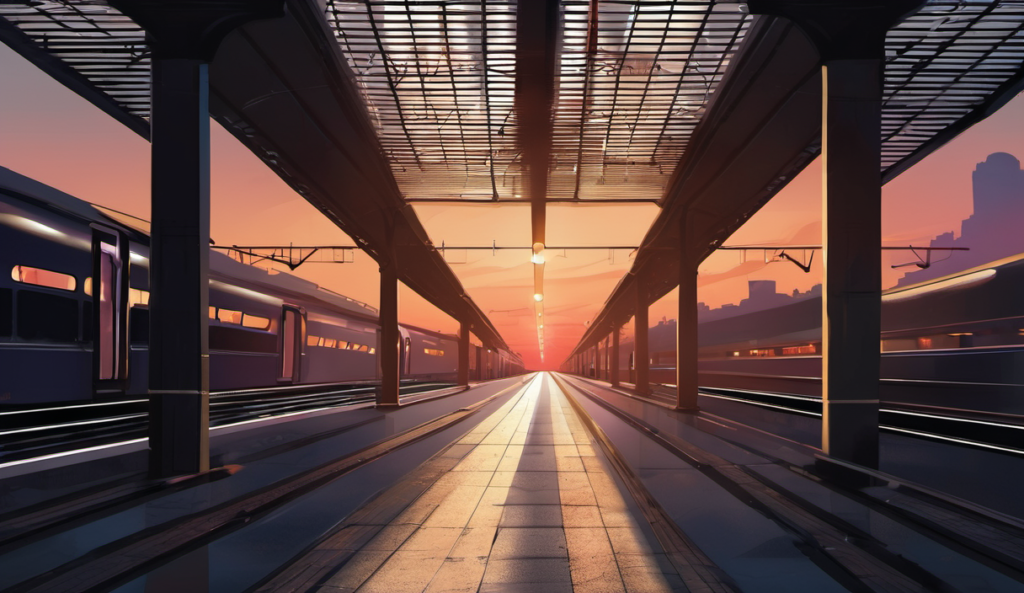
He opened his shop on the platform of the terminal station in the year he was forced to give up his seat to automation. The day the throttle and control column slipped from hands that had flown passenger jets for twenty years, the company set him back down on the ground with a few fine words. Machines had learned to cross the sky more quietly, more precisely, than any human ever could.
He set up the shop beside the ticket gates. Four chairs. Coffee, light fare. The station had been decommissioned for ten years; its only residents were the rust on the tracks and the long autumn wind. Almost no customers came. Yet he opened the shop every evening. Opening it was the only work left to him.
At 11:47 each night, a train glides in carrying no one. The driverless car, a black box of a thing, stops within three centimeters of its mark, without a sound, without shedding light. The doors never open. There is no need. He watches it all as he wipes a cloth.
The train carries freight, thank-you gifts sent from rural municipalities. Rice, miso, fruit, sweets. When someone makes a donation online, the system sorts it automatically, loads it automatically, delivers it automatically to this terminal station. But lately many of the addresses belong to hamlets that have vanished around the station. No houses. No people. Still, the gifts arrive.
Unmanned courier robots haul away the packages no one claims. Though there is nowhere to take them, the robots repeat the same motions every night. In some distant village, someone presses the donate button and keeps sending goods to places where no one lives. The addressees moved to the city long ago. Yet the registry insists they still live on a vacant lot at the edge of town.
One night he opened a cardboard box left in front of the shop. It was packed with apples. He took one and ate it. Sweet. Nowhere on it was the name of whoever had grown it. The system has no need for names. Donors, gifts, deliveries, everything moves back and forth as numbers.
When he was a captain, he used to look down on the city lights from above the clouds. The homeland at night was made of countless points of light. No longer. In nighttime aerial photographs of Japan, the scattered lights grew steadily fewer each year. No new lights came on where old ones had gone out. Only the web of rail lines, roads, and delivery routes remained, like a spider’s web after the people were gone.
11:47 came and went, the hour the train should have arrived, and no light appeared on the tracks. He stepped outside. For the first time. The monitor in the control room had stayed blue the whole while.
At 11:50, one light came on beyond the mountain, then another. Over the old hamlet sites, streetlamps with no one to shine for brightened one after another. The power company’s system kept transmitting, unaware of the loss. The line of lights flowed like a quiet river along the valley floor of night, on toward where the tracks had vanished.
He sat down and drank his cooling coffee. He would open the shop tomorrow, too. Maybe at 11:47 tomorrow the train would return. Maybe it wouldn’t. Either way, for now, he would stand on the platform of the terminal where no one gets off, and watch the river of lights.
When the system forgets the last human, does the world end? Or when the last human forgets the system, does the world begin? The night wind passed through the platform, and somewhere, he felt, a departure melody had begun to play, reaching no one.